_PNG.png)

What is body-positive fashion? Your bold guide
- info255111
- 11 hours ago
- 8 min read
TL;DR:
Body-positive fashion champions clothing that fits and celebrates all bodies, promoting inclusivity and confidence. It emphasizes real sizing, diverse representation, and authentic design rooted in activism, beyond marketing slogans. Supporting genuinely inclusive brands helps reduce waste, promotes sustainability, and fosters social equity.
Body-positive fashion is not what most people think it is. The phrase gets thrown around constantly, but the movement behind it runs far deeper than a few extra sizes on a rail. At its core, what is body-positive fashion? It is a philosophy that says clothing should fit and celebrate the body you have right now, not the one diet culture says you should aspire to. It rejects the idea that fashion is a privilege reserved for certain shapes. It fights for representation, genuine inclusivity, and the radical notion that every body deserves to feel sexy, confident, and completely themselves.
Table of Contents
Key takeaways
Point | Details |
More than sizing | Body-positive fashion covers all bodies, genders, abilities, and ethnicities, not just plus sizes. |
Fit over fashion rules | Garments should support how you actually move and live, not how convention says you should look. |
Authenticity matters | Brands showing diverse models must also offer well-fitting garments across all sizes to avoid tokenism. |
Activist roots exist | The movement grew from fat liberation activism and carries serious social and political weight. |
Sustainability connects | Inclusive sizing reduces waste and aligns body-positive values with slow fashion principles. |
What body-positive fashion actually means ️
Let us get one thing straight. Body-positive fashion is not just a marketing phrase stamped on a size 18 mannequin. The inclusive fashion definition is built on a core shift in thinking: instead of bodies conforming to clothes, clothes are designed to fit and flatter all bodies.
That means inclusivity across size, shape, physical ability, gender expression, age, and ethnicity. It means patterning cut for real proportions. It means fabrics that move, stretch, and support without squeezing or gaping. And it absolutely means zero digital distortion in campaigns, so the people you see in lookbooks actually look like people who exist.
Here is what body-positive clothing genuinely stands for:
Inclusive sizing that runs from XS to 5XL and beyond, with grading that maintains fit rather than just scaling up
Real-body patterning designed around diverse proportions, not scaled from a single sample size
Gender-fluid options that allow anyone to wear what makes them feel powerful
Authentic representation in campaigns, featuring models of different ages, sizes, abilities, and skin tones
Zero retouching policies that show bodies as they actually are
The movement has deep roots in fat liberation activism dating back to the late 1960s, when groups like the Fat Underground pushed back against medical and cultural weight stigma. Those roots matter. Body-positive fashion is not just a vibe. It is a response to decades of exclusion.
Pro Tip: When shopping, check whether a brand’s size range is actually available in the same styles. If the “inclusive” collection is five options buried at the back of the site, that tells you everything.
Representation that goes beyond the campaign shoot
Putting a size 16 model in a campaign feels meaningful. But if the garment she is wearing is only available up to a size 12 in store, that is not representation. That is theatre.
Brands adopting varied body types in their marketing is a genuine step forward, but the credibility test is always: can every customer in that campaign actually buy what is being sold, in a size that fits them well?
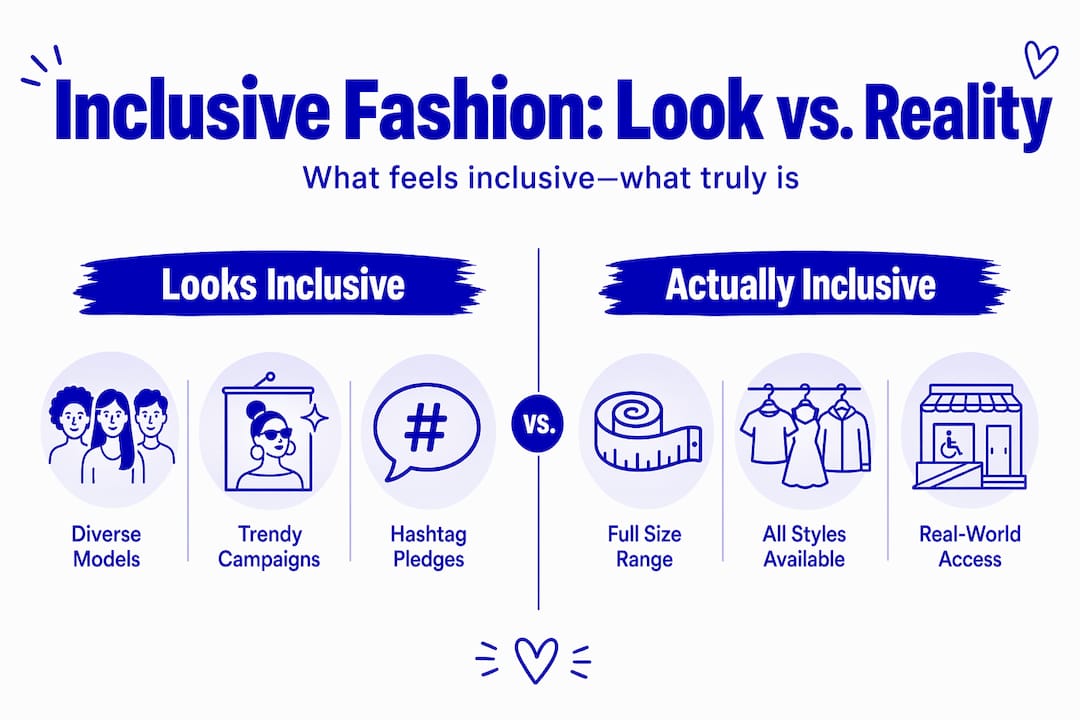
What looks inclusive | What is actually inclusive |
Diverse models in campaigns | Diverse models wearing garments available in all sizes |
Size range listed on website | Size range stocked consistently across all styles |
Body-positive messaging | Patterning and grading designed for varied proportions |
Mannequins in varied shapes | Staff training and fitting support for all body types |
The fashion industry has made progress, but it has not been linear. Reports tracking size inclusivity over time have found that diversity regresses as quickly as it advances, often retreating when commercial pressure shifts back to aspirational aesthetics.
Campaigns like Dove’s #UnseenBeauty set a stronger benchmark by committing to authentic imagery without digital distortion, representing age, size, and ethnicity without the airbrushing that usually smooths everything into sameness. That is the standard.
Pro Tip: Look beyond the campaign imagery. Check a brand’s mannequin shapes in store, whether staff are trained to fit all bodies, and whether the extended sizing is priced equally. These are the tells.
The politics inside the movement ✊
Here is where it gets complicated, and this part is worth understanding properly.
Body-positive fashion as a concept has been co-opted. The activist movement it grew from, fat liberation, was about systemic change: challenging medical discrimination, weight stigma in employment, and the cultural machinery that profits from making people feel inadequate about their bodies.
What many brands do now under the “body positive” banner is something softer. It is feel-good messaging that misses the systemic roots entirely. “Love yourself” slogans on garments that do not come in a size 22. Influencers with conventionally attractive bodies speaking as body-positivity advocates. It looks inclusive. It sells. And it dilutes the original message.
“The concern is that body positivity has become a feel-good buzzword that allows brands to pat themselves on the back for the bare minimum, while the structural barriers that larger-bodied people face remain completely intact.” This tension between activist intent and commercial execution sits at the heart of every genuine conversation about what this movement means in 2026.
That does not mean commercial engagement with body-positive fashion is worthless. It means you need to know the difference. Exposure to diverse body types genuinely shifts how people perceive beauty norms, which is meaningful even when the brand behind it has commercial motives. The question is whether that exposure comes with real structural change or just a refreshed ad campaign.
How to actually wear body-positive fashion
Right. Theory is great. But here is how you bring body-positive principles into your actual wardrobe and shopping habits.
Shop for fit, not size labels. Sizing is inconsistent across every brand. A number on a label tells you almost nothing about whether a garment will feel good on your specific body. Try things on. Prioritise how you feel in motion over what the tag says.
Choose fabrics that support your lifestyle. A garment that supports how you actually move is doing its job. If you are active, expressive, or just someone who sits in various positions throughout the day, your clothes should accommodate that without pulling, gaping, or restricting.
Audit your wardrobe for shame pieces. You know the ones. Clothes you keep because they might fit one day, or because you think you should be able to wear them. Clear those out. Keep what makes you feel like yourself right now.
Research brands before you buy. Look for concrete signals of inclusivity beyond marketing language: a full size range stocked consistently, real-body patterning, diverse mannequins, no photoshopping. These are the brands putting genuine effort in.
Wear what you actually want to wear. This sounds obvious. It is not. Fashion celebrating diverse bodies means celebrating your body in the things that excite you, not in the silhouettes someone decided were “flattering” for your shape. Bold prints, tight fits, cut-outs, sheer fabrics: none of these are reserved for one body type.
Pro Tip: Unisex and gender-fluid garments are often cut with more body variation in mind. Exploring unisex apparel options is a genuinely useful way to find pieces that fit more comfortably across different body shapes.
The mental well-being benefits of dressing for yourself rather than for approval are significant. When your clothes reflect your actual identity rather than an aspirational version of it, the relationship between how you dress and how you feel shifts dramatically.
Body-positive fashion and sustainability
These two conversations belong together more than most people realise.
Fast fashion runs on narrow sizing. It produces garments in limited size ranges, sells them at speed, and discards them at the same rate. When data-driven sizing models align with the real population, returns drop, waste drops, and garments actually get worn rather than returned and landfilled.
Sustainability benefit | How body-positive fashion contributes |
Reduced garment waste | Inclusive sizing means fewer returns from poor fit |
Longer garment lifespan | Clothes that fit well get worn more and kept longer |
Ethical production | Inclusive brands often prioritise fair labour practices |
Mindful consumption | Body-positive values encourage buying less, buying better |
Body-positive fashion and slow fashion share a core belief: you deserve clothes that last, fit, and mean something to you. That is the opposite of buying a trending piece in a size that almost fits, wearing it once, and donating it three months later.
The social equity angle matters too. When fashion for all body types is genuinely accessible, the economic and psychological costs of dressing well are distributed more fairly. Larger bodies have historically paid more for fewer options. Genuine inclusivity in the industry addresses that directly.
My take: the movement is real, but stay sharp
I have watched body-positive fashion move from fringe activism to billboard campaigns, and my honest view is that both things can be true at once. The mainstream attention has brought real change for some people. And it has also handed brands a marketing shorthand they can abuse with almost no consequences.
What I have noticed is that the people who get the most from body-positive fashion principles are the ones who do not wait for a brand to tell them they are included. They dress for themselves with complete disregard for the rules that were never written for them anyway. There is something genuinely powerful about that.
My practical advice? Treat body-positive messaging the way you treat any brand claim. Ask what the evidence is. Check the size range available beyond the campaign. Ask whether the patterning reflects a diverse range of bodies or just an upscaled version of the standard fit. And absolutely question influencers who position themselves as body-positive advocates while embodying a very narrow version of what that could mean.
The future of this movement depends on whether authentic voices stay loud. Support the brands, creators, and designers who take the structural side of this seriously. That is where the real change lives.
— michael
Gear that fits you, not the other way around
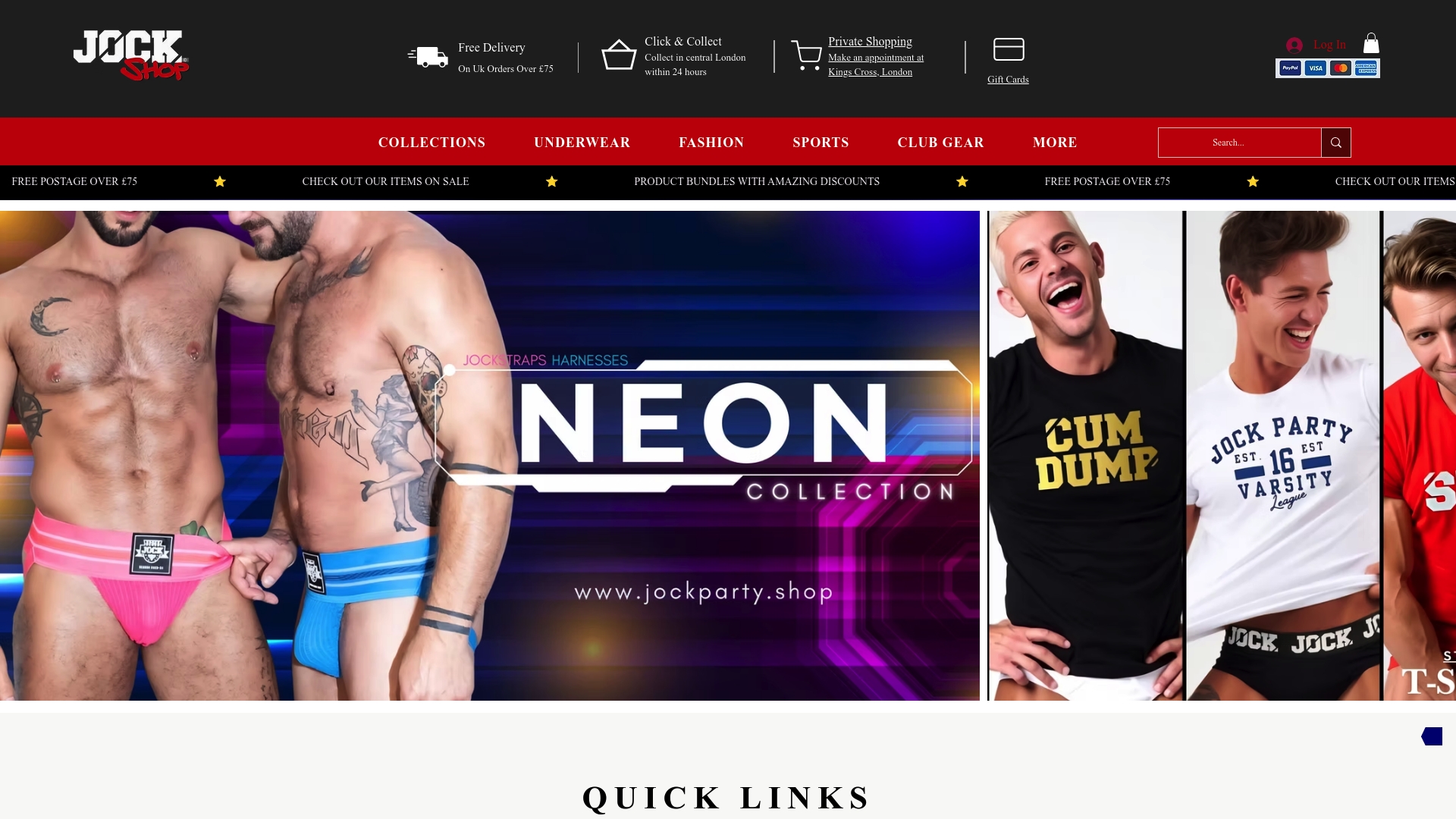
At Jockparty, body-positive fashion is not a tagline. It is what we are built on. Our community is made of men who have spent long enough being told what they should or should not wear based on their shape, and we are absolutely done with that energy. From our underwear bundles designed with real bodies in mind to statement pieces like the Faux Leather Mesh Bodysuit that is built for confidence at every size, we stock gear that is meant to be worn with swagger.
Want to shop with someone who actually gets it? Book a private shopping appointment with our team and find pieces that fit how you live, move, and express yourself. Bold, inclusive, and completely unapologetic: that is the Jockparty standard.
FAQ
What does body-positive fashion mean?
Body-positive fashion means designing and wearing clothes that fit and celebrate all bodies, regardless of size, shape, ability, or gender. It prioritises confidence and self-expression over conforming to narrow beauty ideals.
Is body-positive fashion only for plus sizes?
No. Body-positive fashion is for every body type, including those outside both plus-size and straight-size categories. It covers diverse sizes, shapes, ages, genders, and abilities, with the emphasis on fit, comfort, and authentic self-expression.
How can you tell if a brand is genuinely body-positive?
Check whether the brand stocks its full size range consistently, uses real-body patterning, features diverse models without digital retouching, and avoids performative inclusion where diverse models wear styles not available in extended sizes.
What is the difference between body positivity and fat liberation?
Fat liberation is the original activist movement challenging systemic weight discrimination and medical bias. Body positivity, particularly as used commercially, is often a broader and softer message about self-acceptance that diverges from activist roots and can lack structural critique.
Does body-positive fashion connect to sustainability?
Yes. Inclusive sizing reduces returns and garment waste, and data-aligned sizing models produce garments that actually get worn and kept. The values also overlap with slow fashion principles around mindful consumption and ethical production.
Recommended

Comments